
Posted
10/07/26
Author
Rory Chatterton
Dev's fine. Offshore less so
I'm not sure whether the bubble pops when the ai ponzi collapses in on itself, or when TCS gets out bid by an end-to-end dev harness that builds the governance, risk mitigation and delivery into a single service.
Yes I get the lack of congruence of thought there
We watched this pattern a decade ago, when every operational problem could be solved with a credit card. Everything was SaaS now, so stop worrying about security and ops. Engineering budgets got slashed for a bit, consultancies promised massive savings, and we all know how that went. The savings never materialised. IT is more expensive than it has ever been. Salaries went up, the roles changed, and infra teams spend more on managing and maintaining than they ever did before.
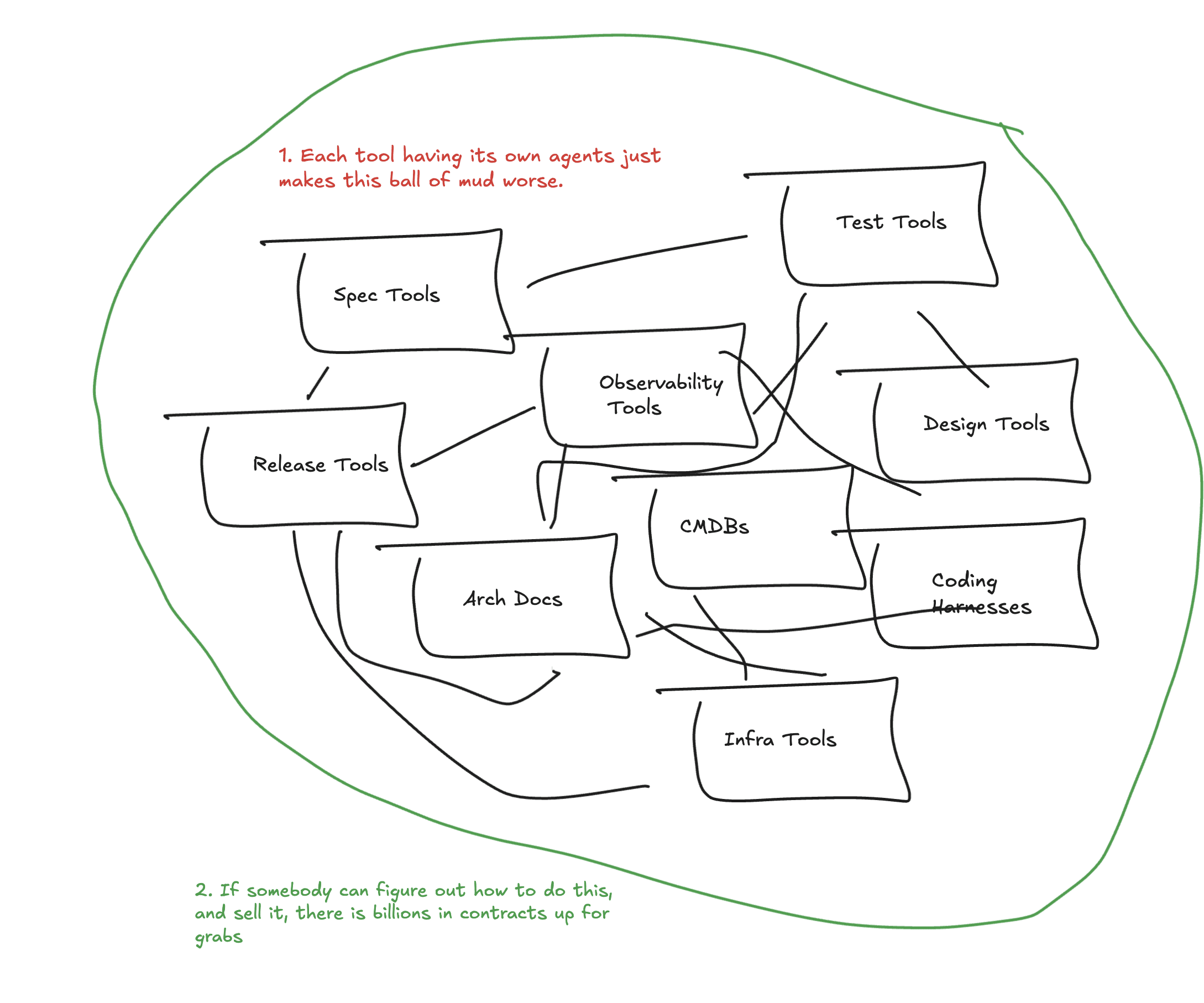
The same shape is playing out with AI. Every tool is now an agent MCP management magic machine, and we still have all the same problems we had before. They work in isolation, they kinda suck at integrating, and nobody is standardising on compliance or process.
A shit load of people got fired. Those same people are being rehired now because it didn't work the way marketing said it would.
So I think the devs embedded inside companies are going to be fine. Bare metal didn't disappear, it stopped being the default and became a specialty, and the people still doing it charge more, not less. Companies keep relearning the same lesson: the people who hold the context were never the cost centre.
I don't have the same confidence for the big offshore agencies. It's a matter of time before a smart company with a big budget undercuts the people mill that has made a small number of titans a lot of money.
And there is a lot of money in AI consulting right now, precisely because the space is nebulous, the practice is immature, everybody is an expert, and there hasn't been enough time for real expertise to emerge. Look at the Claude Code leak. It was never about engineering excellence.
But it gets more nuanced when you split engineering by how it actually operates, onshore versus offshore.
The polite defence of the offshore model is that the engineering quality is the same, you're just paying a lower cost of living. We all know that argument is bullshit, because the great engineers always end up joining. They get poached, embedded, brought in-house. What the retainer actually buys is the revolving door.
Like, seriously. We all know at least one principal engineer whose entire job is babysitting that door: writing the specs, detailing the requirements, waiting for the response, reviewing whatever comes back from whoever is on the other side this quarter.
Read that job description again. It's prompt engineering with a nine-month feedback loop.
The interface already exists. Enterprises spent twenty years proving that spec-driven delivery at arm's length works. They just priced the executor by the head, in a timezone that answers overnight, with attrition that resets the context every six months.
So no, I don't think dev gets solved by every tool under the sun going agentic. That's just the sprawl again, with better demos. The real transformation looks like taking the outsourced model, the specs, the gates, the arm's-length delivery, and making it turnkey: one pre-integrated loop, opinionated end to end. The point tools don't die either. They become the parts you build your own loop from, if you'd rather intercept than buy.
Swap the bench for a model and the principal engineer keeps their job. The retainer doesn't.
And I don't write that with any glee. The arbitrage employs millions of people, and it's the closest thing some economies have to an industrial policy. The uncomfortable part isn't even the jobs. It's that the bottom rung of the offshore pyramid was also the training ground, the place the great engineers who kept getting poached actually came from. Automate the rung and you've automated away the ladder. What happens then?